For a long time, I was doing the work of a Product Manager without the official title. Back when I was working in online retail, I was constantly jumping between design, strategy, and just putting out fires. I was already balancing what users wanted with what the business needed, but diving into AI is what finally made it all click for me.
One thing I’ve learned quickly: in the AI world, you can’t just "design" your way out of a bad system. Working on recent projects, I saw how tough it is to take a traditional SaaS platform and try to make it "feel" like AI without changing the foundation. If the "plumbing" isn't built for AI from day one, it doesn't matter how nice the UI looks—the experience just won't feel right.
If you’re like me and moving into AI PM-ing, you realize pretty fast that you can’t ignore the technical stuff. You have to understand how the engine works to know what’s actually possible for the user. To keep my head straight, I like to use a simple kitchen analogy for all this "boring" infrastructure.

The Kitchen Stack
To stop seeing AI as a 'black box' and start seeing it as a craft, I started mapping these complex layers to a simple kitchen stack to make the technical stuff actually make sense for my UX brain. Here is how:
The Data Layer (Pantry): You can't cook a great meal with bad ingredients. Vector Databases are like a smart pantry, they don’t just store stuff; they group things by how they "taste" (their meaning). It’s the difference between a messy closet and a pantry where everything is exactly where it should be.
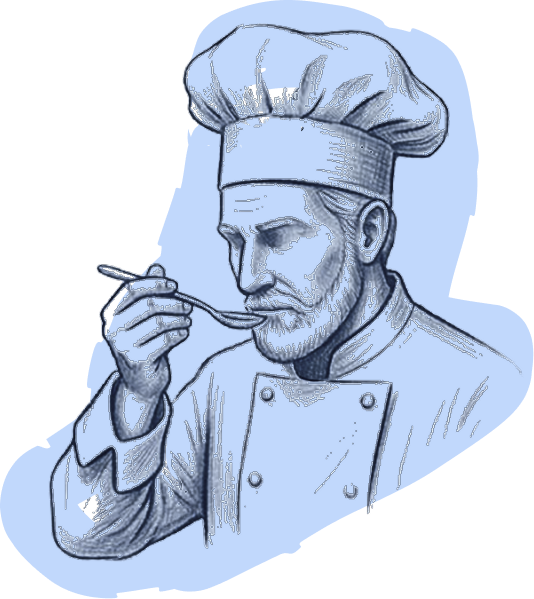
The Model (Chef): This is the heart of the operation. Just like a chef has a specific training and style, different models have different strengths. As a PM, you aren't cooking the meal yourself, but you need to know which Chef you’re hiring for the job.

MLOps (Prep Work): This is the invisible workflow. Think of it as the "clean as you go" rule. It’s what makes sure that as we update our recipes (the models), the quality stays the same and the kitchen doesn't turn into a disaster zone.

Evals/Feedback Loop (Taste Test): In a professional kitchen, nothing leaves the pass without a spoon hitting the sauce. In AI, this is the "Eval" layer. It’s how we ensure the model isn't just "cooking" but actually hitting the flavor profile the user expects. If the feedback loop is broken, the kitchen keeps serving salty soup without ever knowing why the customers are leaving.

Model Serving (Pass): This is where the food is handed to the waiter. In AI, this is about Latency. If the kitchen takes forever to plate the food, the customer is already annoyed before they even take a bite. Speed isn't just a technical metric; it’s a core part of the UX.

Agents & UI (Dining Room): This is the only part people actually see. My UX background tells me the "vibe" here sets the expectation. The Agent is like a great waiter, it takes a vague request ("I want something spicy") and works with the kitchen to make it happen.

The Bottom Line
AI isn't just a new feature we can bolt onto existing products; it’s a fundamental shift in how we build. For those of us navigating this transition, the goal isn't to become engineers—it's to become better architects. When we understand the "pantry" and the "prep work" behind the scenes, we stop guessing and start building with intention. The best AI products of the next few years won't be the ones with the most features, but the ones built on the most solid, well-understood foundations.